Dr. Sakshi S Ranpise
A new era is unfolding in the world of aesthetics – one where artificial intelligence meets artistry, and imaging technology offers a crystal-clear window into cosmetic possibilities. In 2025, AI is not just powering devices or optimizing clinic operations; it is becoming an active partner in patient consultations, revolutionizing how we envision, plan, and deliver aesthetic outcomes. Cosmetic consultations, once limited to verbal discussions and physical assessments, are now immersive, data-driven experiences. Thanks to advancements in imaging and AI, patients can see their potential transformation before a single needle or laser touches their skin. The result? Greater trust, transparency, and satisfaction.
The Power of Predictive Imaging
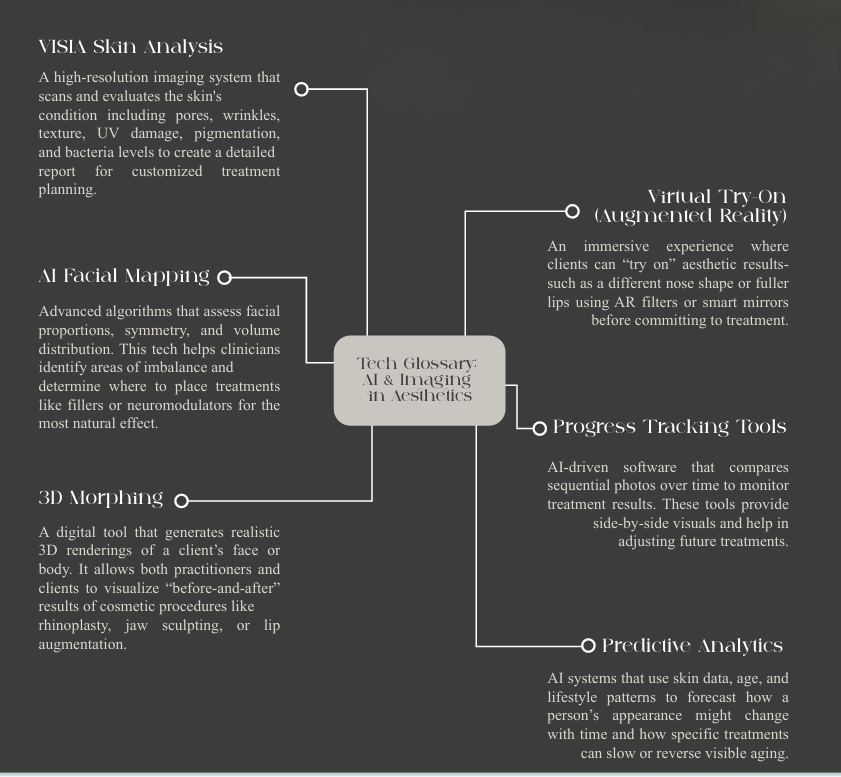
Imagine sitting down with your aesthetic practitioner and being shown a lifelike 3D rendering of your face not only as it is now, but how it could look after various treatments. From smoothing fine lines and enhancing contours to correcting asymmetry or visualizing skin tightening effects, AI-driven imaging systems allow both client and clinician to preview realistic outcomes with precision. This isn’t science fiction—it’s happening today in cutting-edge clinics across the world. Technologies like VISIA skin analysis, 3D morphing software, and real-time facial simulation tools are giving patients a clearer understanding of what to expect, reducing anxiety and miscommunication.
From Guesswork to Guided Precision
One of the most significant benefits of AI in consultations is its ability to replace guesswork with guided precision. Algorithms analyze facial symmetry, skin condition, texture, pore size, and underlying pigmentation to provide objective insights. These data points are then used to suggest customized treatment plans that align with each client’s unique facial structure and aesthetic goals. For example, AI can recommend the exact placement and dosage of dermal fillers or Botox to maintain natural proportions. It can also track skin aging over time, helping practitioners suggest preventive treatments before concerns even become visible. This data-driven approach enhances clinical decision-making and ensures that aesthetic interventions are beautiful but also balanced, tailored, and safe.
Empowering the Patient Journey
AI-powered consultations also empower patients by making them active participants in their aesthetic journey. When clients can see the proposed results of a nose refinement, a non-surgical facelift, or acne treatment plan, their expectations are better aligned. They feel informed, heard, and reassured. This transparency leads to more confident decisions, fewer revisions, and stronger relationships between client and clinician. In many cases, visualizing the “after” inspires patients to explore comprehensive care combining skin rejuvenation, nutrition, and body sculpting for an all-around transformation. Moreover, many systems now integrate before-and-after photo tracking, allowing patients to view their progress and celebrate results over time. These visual timelines are not only motivating but also serve as compelling educational tools.
AI as a Tool – Not a Replacement
Despite its sophistication, AI is not replacing the practitioner – it’s enhancing their capabilities. The human touch, artistic eye, and emotional intelligence of a skilled aesthetician or doctor remain irreplaceable. AI simply adds another layer of depth, helping practitioners make informed, data-supported choices while respecting the client’s vision. In this way, AI becomes a co-pilot – supporting the clinician in delivering safer, more consistent, and more satisfying results.
Where Technology Meets Transformation
AI and imaging are not just technological innovations; they are redefining the consultation experience as a moment of clarity, creativity, and confidence. They bring transparency to beauty, turning ideas into visuals, and visuals into empowered choices. In 2025, the cosmetic consultation is no longer a conversation based on imagination. It is a collaborative vision built on science, artistry, and the intelligent power of AI – where every journey toward aesthetic enhancement starts with a clear view of what could be.
Looking Forward: The Future of Personalized Aesthetics
As AI continues to evolve, we can expect even more exciting developments in the near future. Integration with genetic data, hormonal profiling, and precise facial emotion analysis could soon provide even more personalized treatment plans. Imagine a consultation where your emotional expressions, facial physiology, and biological markers are all taken into account allowing for treatments that support not just how you look, but how you feel. Virtual and augmented reality will also play a larger role, allowing patients to “try on” results through smart mirrors or holographic projections, making consultations immersive and interactive.